
What is Collective Mindfulness?
Safety is traditionally managed through an approach which we might define as "command and control". People are empowered to achieve targets, in most other areas of business, using creativity and imagination. When we set targets for safety, we also tell people how these should be achieved. We give them very "tight" procedures; with very little room to manoeuvre.
When taken to its limits, the command and control approach can often amount to excessive management control. What also commonly happens is that the workforce actually challenges that "control" by deviating, often in the smallest of ways, from those procedures. Thus the excessive control then constrains the completion of tasks. This form of "challenge" also commonly ends up being found within the causal chain of some pretty significant accidents.
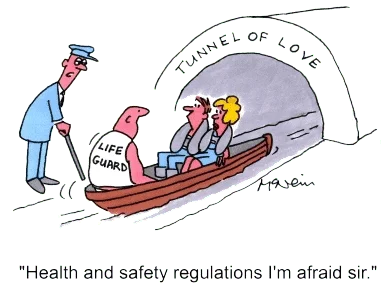
A traditional approach to safety then tends to be top-down with managers providing "advice" to their front-line workers. The managers are in turn guided by "Regulations". This approach is really not that helpful - remember Regulation is often determined as being the "lowest common denominator" agreed to by a range of politically motivated stake-holders. The end result may well be the production of a workforce that cannot think for itself. A workforce such as this may make inappropriate responses to novel hazardous situations - as they often are.
Consider this: accident investigation teams will often attend to the technical and procedural causes of accidents. This approach naturally leads those teams to identify technical and procedural solutions. It is pretty easy to see why this happens.
- Technical and procedural failings are easy to understand and these types of solutions usually lie within the area of competence of the investigators.
- It is relatively straightforward to identify some corresponding corrective action.
This approach gives the impression that the problem has been fixed, but the fix may turn out to not address the deeper underlying causes. When is the last time you included a human behaviour professional (safety psychologist) on an investigation team?
The root-causes of accidents though often go back to "cultural" factors. Management teams often feel impotent to fix these factors, or fail to recognise these factors, or believe that the fixes are beyond the scope of their responsibilities.
Attention will be given to these deeper issues only if the environment and work culture actively considers the management of accident hazards as part of day-to-day work planning. Moreover, robust cultural change will not be achieved through any single process or initiative, but can only occur through changing the nature of conversations in the workplace.
I am reminded of what my colleague Andrew Hopkins stated in his excellent book "Lessons from Longford" about the Longford gas plant explosion in Australia in 1998 (we deal with this in detail within the Anatomies of Disaster Seminar Series designed by Transformational Safety). Hopkins said "… high reliability organisations are characterised by collective mindfulness about the possibility of disaster."
Click here to see the value that the Harvard Business Review places upon Collective Mindfulness.
Collective Mindfulness is a way of looking at the internal foundations that are percolating through the roots of a business. Whilst Safety Culture is something that we can often see, via way of external symbology and behaviours; collective mindfulness is something even deeper within the psyche of the business.
The initial position of Collective Mindfulness within the pantheon of pro-active safety management strategies was developed by Professor Karl Weick. He posited that if an organization spent time showing focus and attention on five (5) general areas they would be well prepared, as an organisation, to confront the deeper challenges. Weick's five Collective Mindfulness dimensions are:
- Sensitivity to Operations
- Deference to Expertise
- Tendency towards Resilience
- Pre-occupation with Failure
- Reluctance to Simplify
Safety comes with a price. That price may be the constant worry that one has not done enough to achieve safety.
If you would like to review a free copy of the Collective Mindfulness (HRO) Personal Awareness Instrument just click here.

"When is the last time you included a safety psychologist on an accident investigation team? If you cannot remember — or the answer is never — then you have been finding technical solutions to cultural problems for your entire career. And the accidents have kept happening. Exactly as you should expect."