
SAFE-T-SOS Psycho-Behavioural Safety Sytem
The SAFE-T-VIEW Observational Process
The SAFE-T-VIEW Observational Process is a fundamental element of Transformational Safety's SAFE-T-SOS Psycho-Behavioural Technologies.
It is the observation-feedback process that is the cornerstone of ninety percent plus (90+%) of trdaditional behavioural safety systems. There are all sorts of reasons for that approach, and you are encouraged to review the behavioural safety primer produced by the UK Health and Safety Executive is you wish to dig deeper.
The "observational process" though is a means to and end, and we at Transformational Safety® take a very unique approach to maximizing leverage from the interactions around observed behaviour. SAFE-T-VIEW is a key part of the journey.
Remember that one of the initials steps when designing an observational process for your workplace is defining safe/unsafe observable behaviours and creating a simple pro forma/checklist for the recording of task observations against those parameters. As time goes by, if all goes according to the traditional behavioural model (life is rarely that kind), you shall begin to see far more "safe" behaviours than the "unsafe". In other words the requirement to provide constructive feedback around correcting unsafe behaviours shall diminish. After all, that is why you have jumped aboard the behavioural train, is it not?
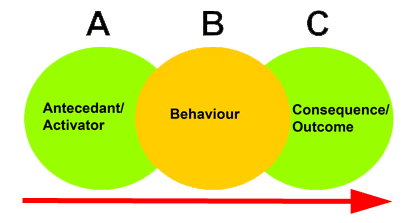
Remember what "C" stands for in the A-B-C behavioural feedback model. It stands for "Consequences". What that means is that the "communication" that occurs at the point-of-contact is the critical point in the behavioural observation process. You can stand around and record as much safe/unsafe behaviour as you like; if you don't manage to utilize that opportunity to encourage those people observed to continue and see value in the "safe" way of doing things, your BBS Process shall fail. For heavens sake do not make the mistake of thinking that pretty charts showing the ratio of safe/unsafe behaviours is a good indicator of how things are going. It might only take ONE unsafe behaviour, in combination with a process fault or two, for something to go "bang". Not a good outcome for anyone.
The safety literature clearly tells us that the application of the Transformational Safety® competencies contributes to higher levels of Safety Engagement. It has also been shown that the greater the level of Safety Engagement within the workplace the higher level of discretionary behaviours around the safety equation. To put that another way; ensuring that the behavioural observation process incorporates transformational safety communication competencies at the point of contact we actually end up making a contribution at the "A" point on the A-B-C behavioural feedback model. That is the ultimate goal of any behavioural safety system; to modify the behaviour of employees to a point where they make "safe" decisions as a matter of course. Not unlike the reaching for the seat-belt.
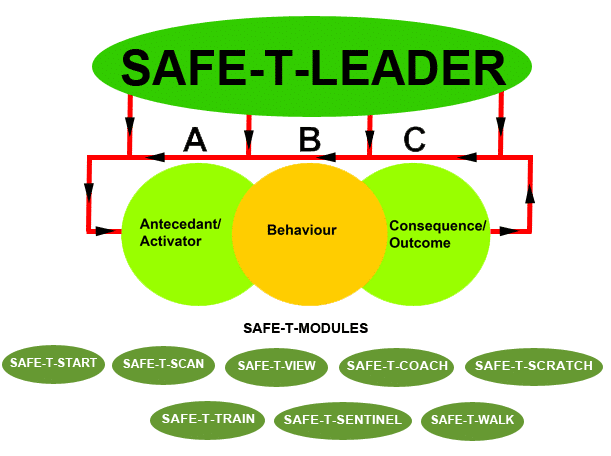
To read more about the SAFE-T-SOS Psycho-Behavioral Technologies just Click Here.

"Most behavioural safety systems measure what people do. SAFE-T-VIEW changes what people believe. By integrating Transformational Safety® communication competencies into every observational interaction, we intervene at the Activator stage — before the behaviour occurs. That shift — from consequence management to belief management — is the difference between a safety program and a safety culture."