
SAFE-T-SOS Psycho-Behavioural Safety Sytem
The SAFE-T-SCAN© Mini Risk Assessment
The SAFE-T-SCAN© Mini Risk Assessment is the next step in the behavioral chain of decision making. Whilst the SAFE-T-START© Card introduces the employee to an elemental consideration of the general requirements that they may confront within their work task, the SAFE-T-SCAN© takes that consideration to the next level.
The SAFE-T-SCAN© Mini Risk Assessment takes employees through a four (4) step process which culminates in a decision to either proceed with the task, proceed with the task following further education/equipment/PPE provision etc, or abandon the task - and seek an alternate methodology.
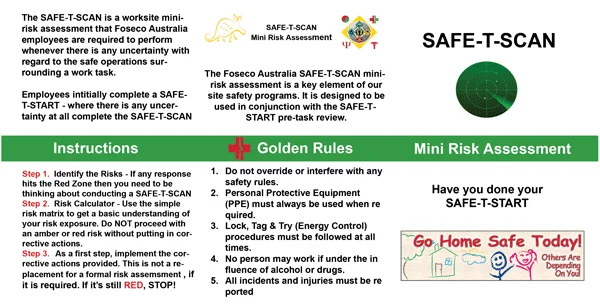
The Four Steps of the SAFE-T-SCAN©
The SAFE-T-SCAN© four (4) step process leverages the seminal influence of Operational Risk Management (ORM); a key hazard management tool of many military organizations around the World. Remember military operations are the one workplace where your competitor is out to kill/maim you. Therefore the hazard and risk management approaches, by definition, need to have the ability to function within toxic work environments. Whilst we would hope that other work environments do not confront that level of occupational toxicity, there is great advantage in using ORM tools as a mechanism to influence safer work behaviours within our workplaces.
| 1. | Identify the Hazards The first step requires the employee to actively identify all potential hazards associated with the task before commencing work. |
| 2. | Ask the What If Questions The second step encourages employees to think critically about what could go wrong — challenging assumptions and exploring potential failure points before they occur. |
| 3. | Determine the Risk Exposure The third step requires employees to assess the level of risk exposure associated with the identified hazards — evaluating both the likelihood and potential consequences of an incident. |
| 4. | Implement Control Measures The fourth and final step requires employees to put in place appropriate control measures to eliminate or reduce the identified risks before proceeding with the task. |
To review the background to the SAFE-T-SOS© Psycho-Behavioural Safety Systems just Click Here.
If you would like to read what the UK Health & Safety Executive says about risk assessment just Click Here.

"Ask the What If questions. That single step — before a single tool is picked up, before a single valve is turned — is the difference between a workforce that reacts to incidents and a workforce that prevents them. SAFE-T-SCAN© was built around the discipline of asking What If before the moment arrives when you need the answer."